It's the question we get from nearly every guest who's never been on a small boat before: "am I going to be seasick?" Here's the honest answer — what actually causes it, why Madeira's south coast is gentler than people expect, and what to do if you're prone to it.
Is seasickness common on a boat trip in Madeira?
It's less common than most first-time visitors assume. Seasickness comes from the inner ear disagreeing with what your eyes see — the motion you feel doesn't match a fixed horizon, and that mismatch is worst in open, choppy ocean. Madeira's south coast, sheltered by the island's own bulk from the prevailing north and north-east winds, doesn't behave like the open Atlantic. Boats running between Funchal, Câmara de Lobos and Ribeira Brava stay close to land the entire time, in water that's usually a gentle roll rather than a chop. Most guests who worried about it beforehand tell us afterwards they never thought about it again once we were underway.
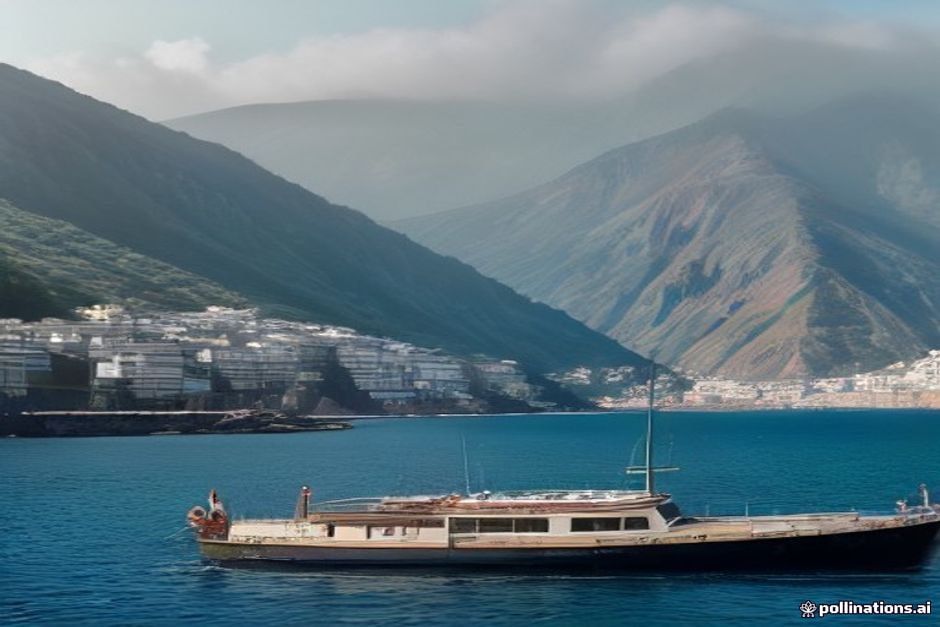
Why is the sea calmer along Madeira's south coast?
Because the island itself acts as a windbreak. Madeira's mountains rise steeply from the coast, and the prevailing wind and swell come from the north — so the south coast, running from Funchal past Câmara de Lobos and Cabo Girão to Ribeira Brava, sits in the island's lee for most of the year. That's precisely the stretch our Day Trip and Sunset Trip both run along. Conditions still vary day to day, which is why any responsible operator checks the marine forecast before every departure rather than promising calm water regardless of weather — but structurally, this coastline is about as forgiving as boating in Madeira gets.
What actually helps prevent seasickness?
Watching the horizon does more than most people expect — fixing your eyes on a stable, distant point re-synchronises your inner ear with what you're seeing, which is why the worst place to sit is below deck or staring down at a phone. Staying near the middle of the boat, where motion is smallest, also helps, as does fresh air over a stuffy cabin. If you know you're prone to it, over-the-counter tablets like cinnarizine or dimenhydrinate work well when taken 30–60 minutes before boarding, and acupressure wristbands are a reasonable side-effect-free option many guests already carry from flights or ferries.
What should you eat and drink before a boat trip?
Something light and plain, an hour or two ahead — toast, fruit, or a simple sandwich sits far better than a heavy, greasy meal or nothing at all. An empty stomach is almost as bad as an overfull one, and alcohol the night before makes any motion sensitivity worse, not better. On board, small sips of water and staying out of direct sun both help more than people expect; dehydration and overheating amplify queasiness on their own, independent of the boat's motion.
Which Chifbay trip is gentlest if you're worried about it?
Both run the identical sheltered stretch of coast, so neither has a structural advantage — but a few practical differences are worth knowing. The Day Trip (2h30, €500, or 3h to Ponta do Sol, €600) includes swim stops at Fajã dos Padres and Ribeira Brava, which give you a chance to get off the boat and reset if you need it. The Sunset Trip (2h, €400, or 2h30 to Ribeira Brava, €500) departs at 18:00, once the day's wind has typically eased, and stays in motion throughout rather than anchoring to swim — some guests find a boat moving steadily at a comfortable speed easier than one bobbing at anchor. Either way, being on a private charter with only your own group means you can ask the crew to adjust speed or route the moment anything feels off, which isn't an option on a shared tour.

Is a small private boat worse than a large catamaran for motion?
Not in practice, though the motion feels different. A smaller boat rides each swell more directly, so you feel more of the sea's actual movement than you would on a large, heavy catamaran that flattens it out. What a small private charter gives back is control: unobstructed views of the horizon from anywhere on board, no crowd blocking the rail, and a crew that knows the coast well enough to ease off in the rare patch of chop rather than holding a fixed schedule. For most guests, that trade-off works in their favour.
The sea doesn't need to be flat to be enjoyable — it just needs a crew that reads it well.
If you've been seasick before, don't let it keep you off the water in Madeira. Tell the crew when you book, sit where you can see the horizon, and remember that this coastline is about as sheltered as boating gets on the island.