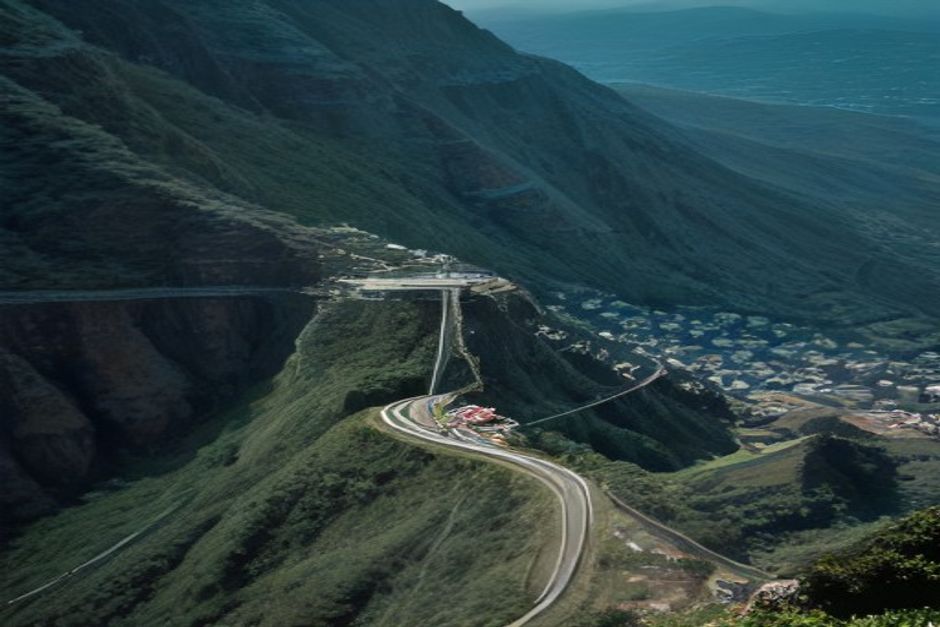
Most visitors see Madeira's north coast from a car window on the way to Porto Moniz. Rocha do Navio is the reason to stop: a cable car that drops from a Santana clifftop straight down to the sea, into one of the island's few marine nature reserves.
What is Rocha do Navio?
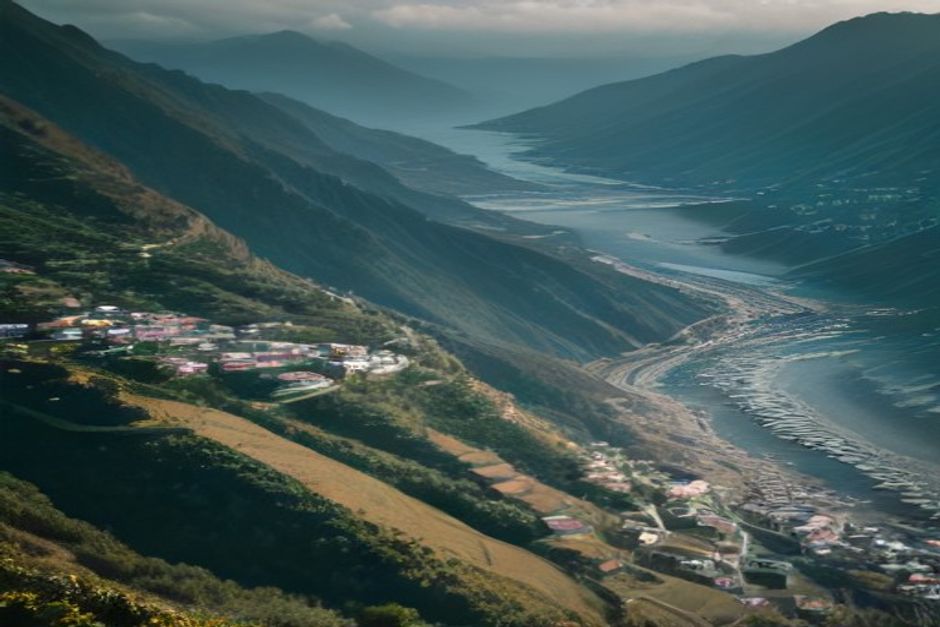
Rocha do Navio is a small cable car and nature reserve on Madeira's north coast, in the municipality of Santana, that connects the clifftop to a fajã — a flat coastal terrace at sea level — where farmers once worked isolated plots of land. The name means "rock of the ship," after a Dutch vessel wrecked there in the 19th century. The reserve itself was created in 1997 to protect the seabed and two small islets just offshore, Rocha das Vinhas and Viúva, making it one of only a handful of purely marine protected areas in Madeira.
How do you get down to Rocha do Navio?
By cable car, in about five minutes. The Rocha do Navio Cable Car runs from a station near Santana down to the fajã, typically operating from around 9:00 to 13:00 and 14:00 to 17:00 on weekdays, with slightly longer hours at weekends — it's worth checking locally on the day, since small local cable cars in Madeira do close for weather or maintenance. The round-trip fare is modest, commonly quoted at somewhere between €5 and €8, and the ride itself is part of the appeal: a slow, open descent over cliffside farmland with the Atlantic filling the view the whole way down.
Can you hike down instead of taking the cable car?
Yes. A trail of roughly 1.5km, dropping about 330 metres, runs from near the upper cable car station down to the fajã, so you can walk one direction and ride the other. Going down on foot and back up by cable car is the easier combination, since climbing 330 metres of steep coastal path at the end of a visit is considerably harder than starting with it.
Is there a beach or pool at Rocha do Navio?
Not a sand beach — the shoreline at the bottom is a bay of volcanic pebbles, and water shoes make a real difference on the stones. It isn't a natural pool complex like Porto Moniz or Seixal further along the north coast, and the open Atlantic swell here means conditions for wading or swimming vary a lot day to day. Most people come for the walk, the view and the setting rather than for swimming.
What makes the nature reserve worth protecting?
Rocha do Navio's marine reserve covers the seabed to about 100 metres depth around the fajã and its two islets, giving fish and invertebrate populations a stretch of coastline shielded from fishing pressure — the same logic behind Garajau's reserve further south, just on the wilder, more exposed side of the island. Above the waterline, the old terraced farmland and cliffside vegetation give a sense of how isolated these north-coast fajãs were before cable cars and roads reached them.
How does it compare to the rest of Madeira's north coast?
It's quieter and more specific than the north coast's bigger draws. Porto Moniz has its volcanic swimming pools, Seixal has a proper natural pool and black-sand cove, and São Vicente has its caves — Rocha do Navio's appeal is the descent itself and the sense of reaching a piece of coastline that used to be reachable only on foot. It's an easy add-on to a Santana day that already includes the thatched houses or Queimadas Forest Park, rather than a standalone destination worth a long drive on its own.
Should you pair it with a boat trip?
Not on the same day, and not with the same boat. Rocha do Navio sits on Madeira's exposed north coast, while a private boat trip with Chifbay runs the sheltered south coast between Câmara de Lobos and Ponta do Sol, where the water stays calm enough for swimming and close-up cliff views year-round. The two sides of the island don't connect by sea for a single excursion, but they pair well across a longer trip — a wild, working north coast on one day, and calm water, cliffs and swimming stops on the other.
Most of Madeira's north coast is scenery you drive past. Rocha do Navio is scenery you climb into.
If you're already tracing the north coast toward Porto Moniz, the detour into Santana for Rocha do Navio costs less than an hour and shows you a side of the island most itineraries skip entirely.