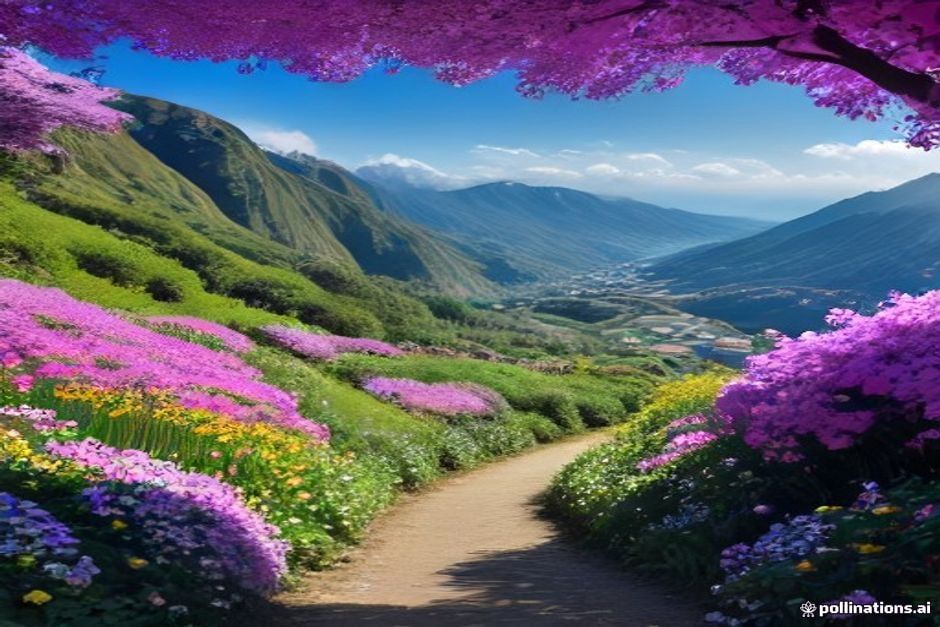
March, April and May are when Madeira earns its "Island of Eternal Spring" nickname the hardest — the hillsides fill with jacaranda and agapanthus, Funchal builds an entire festival around flowers, and the crowds haven't arrived yet. Here's what the season actually looks like, month by month.
Is Madeira warm in spring?
Yes, though it's the mildest of the island's seasons rather than a genuinely hot one. Funchal's daytime highs sit around 19–20°C in March and April, warming to roughly 21–22°C by late May, with nights rarely falling far below 14°C. Because Madeira floats in the Atlantic off North Africa, spring doesn't behave like a European spring — there's no sudden thaw, just a slow, steady climb from a mild winter baseline. Pack layers rather than a heavy coat; a sunny March afternoon on the Funchal seafront can feel like a warm day, while the same morning in the mountains needs a jumper.
Is the sea warm enough to swim in Madeira in spring?
Only marginally, and it improves as the season goes on. The Atlantic around Madeira is slowest to warm of anything on the island, so March actually holds the coldest sea of the year at around 18°C — colder than midwinter, because the ocean is still shedding heat lost over the preceding months. April edges up to roughly 19°C, and by late May it's closer to 20°C, tipping into properly comfortable territory. It's swimmable throughout for anyone used to a bracing dip, but spring is honestly the one season of the year where we'd set expectations at "refreshing" rather than "warm" for a swim stop at Fajã dos Padres or Ribeira Brava — worth knowing before you book if the water is the main draw.
What is the Madeira Flower Festival, and when is it in 2026?
The Festa da Flor is Funchal's biggest spring event, and in 2026 it runs from 30 April to 31 May. The city fills with flower carpets, floral wall installations and markets for most of the month, built around Madeira's exceptional flora. The Children's Wall of Hope takes place on 2 May, when local children press flowers into a wall of chicken wire to form a mural, and this year there are two Allegoric Flower Parades, on 3 and 17 May, with floats and dancers moving down Avenida do Mar. Most of the festival, including both parades, is free to watch from street level — no ticket needed, just an early spot along the seafront.
Does it rain a lot in Madeira in spring?
Less than winter, more than summer. March can still carry the tail end of Atlantic fronts left over from the wet season, with the odd grey, showery day. April and May are noticeably drier and sunnier — the transition that, not coincidentally, is exactly what brings the hillsides into bloom in time for the festival. As on every coast of the island, Funchal and the south stay drier than Santana, São Vicente and Porto Moniz on the north, so a cloudy morning in town doesn't always mean a washed-out day everywhere.
What should you pack for a spring trip to Madeira?
Layers over swimwear. A light jacket, a jumper for the evenings and for anywhere in the mountains, and comfortable shoes for walking cover most of a spring trip — the levadas are at their greenest and least crowded this time of year, right after the winter rains and before the summer heat. Bring a swimsuit for a dip rather than planning a full afternoon in the water, and pack a small umbrella or packable rain shell for March in particular.
Is spring the best time to visit Madeira?
It's the best time for flowers, festivals and hiking — less so for swimming. May is the strongest month of the three: mild, increasingly sunny, and timed with the Flower Festival's parades and markets, all while the summer crowds are still weeks away. March suits travellers who want quiet trails and sightseeing over sea time, and April sits comfortably between the two. If a swim stop matters to your trip, know that spring's water is the coolest of the year; if you'd rather see the island in bloom and still get a good afternoon on the water along Cabo Girão and the south coast, late April through May delivers both.
Summer gets the heat. Spring gets the flowers, the festival, and the quiet trails.
Whichever week you land, check the forecast a day or two out rather than trusting a seasonal average — Madeira's microclimates mean a grey morning in Funchal can turn into a golden afternoon on the water, and vice versa.